
In rural Guatemala, the rainy season reshapes daily life. Roads turn to mud, rivers swell, and travel becomes difficult.
But the rain brings something less visible too. It brings a rise in respiratory infections that can quickly become serious for young children.
For families living far from hospitals, timing matters. When breathing changes, when a cough deepens, or when a child’s chest begins to strain, there is little room to wait and see.
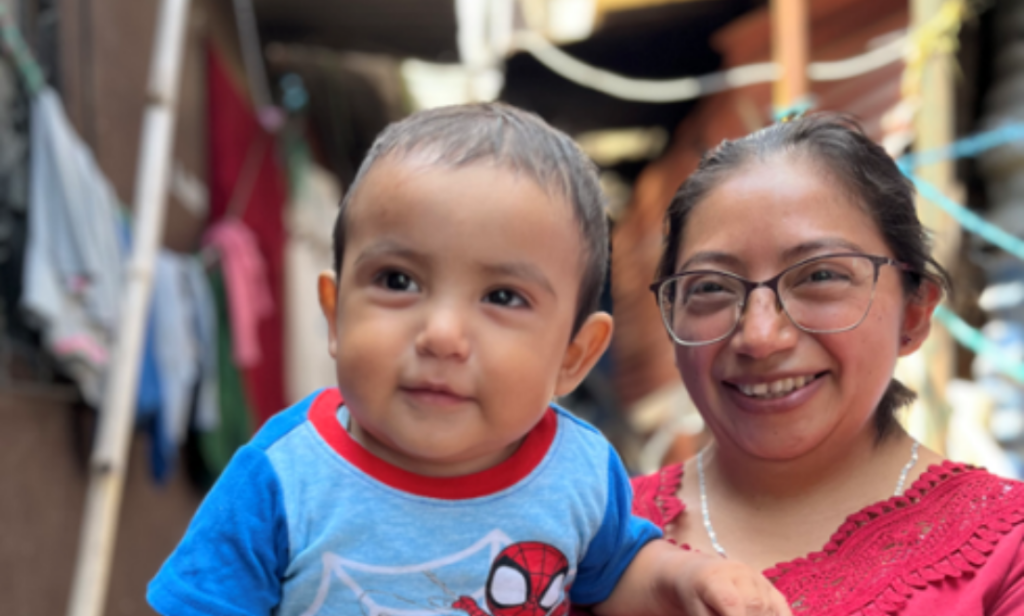
When Mayra’s baby boy, Angel, started coughing, it didn’t seem unusual since children often get sick during the rainy months.
But then his breathing changed.
She could see his small chest working harder than it should. Each breath seemed to take more effort than the last. She could hear the tightness in his lungs, a strained, fragile sound no parent ever forgets.
She didn’t know how she would get him to a hospital or how she would pay for treatment.
“It’s hard to get to a hospital and hard to be seen,” Mayra explained. “And even if you see a doctor, how can you pay for the medicine?”
For many parents, the fear isn’t just about sickness. It’s about how they will pay for the medicine their child needs
Because the small clinic near Mayra’s village was stocked with medicines, the treatment Angel urgently needed was already on its shelves. Mayra did not have to wait. She did not have to find money she didn’t have. She left that day with medicine in her hands and the relief of knowing her son would recover.
Within days, Angel’s breathing eased, the tightness in his chest faded, and before long his energy returned. He was once again playing like a healthy child, his laughter replacing the fearful sound of struggled breathing.
“I’m grateful to be able to count on Dr. Layla’s clinic,” Mayra shared.
Clinics like Dr. Layla’s remain a steady presence in their communities because people like you choose to care.
For families like Mayra’s, a nearby clinic can make all the difference.
Through our Medicines for Children program, supporters help keep essential medicines stocked in rural clinics across Guatemala. Instead of traveling long distances and worrying about how to pay, care is available close to home.
Help is nearby and treatment isn’t delayed. Mothers don’t have to choose between medicine and other basic needs. And when the next mother walks through clinic doors carrying a child who is struggling to breathe, she should find what she needs waiting for her.